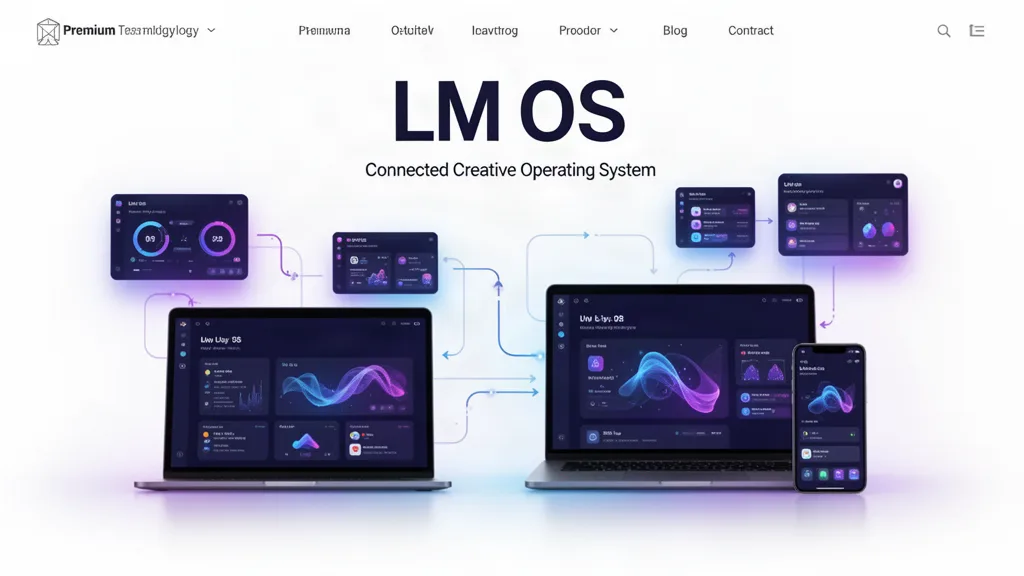
LMOS VOID Beta 0.34.7: Windowed App Hardening, Safer Multi-Desktop State, and Render Certification
LMOS tightens the shared desktop contract: Device Lab no longer nests a second OS shell, multiple LMOS windows coordinate restore-state writes, windowed apps inherit an edge-to-edge surface contract, and Product Certification now includes a rendered desktop runner for every active app.
Pain point → fix → benefit
Device Lab could render LMOS inside LMOS → previews now force windowed mode → responsive checks exercise the app surface rather than a duplicate shell.
Two open LMOS desktops could overwrite one shared restore record → focused-instance writer coordination plus per-window session storage → background desktops stop fighting over continuity.
Apps could technically follow the window runtime while still looking like centered web pages → the desktop contract now includes shared edge-to-edge window chrome → app-specific work fills the window without another website frame.
A declared desktop contract could be mistaken for proof → Product Certification now has an explicit rendered app runner → every active app must earn evidence across the same ten window behaviors.
What remains manual
Rendered desktop certification is intentionally not auto-passed. It still requires real-browser evidence for each active app, especially resize breakpoints, fullscreen behavior, focus, app-specific controls and session continuity.
Use the beta on real work.
The most useful feedback is not “I like it.” Tell us where you hesitated, what took too many clicks, what did not save the way you expected, and what would make this useful enough to return to next week.