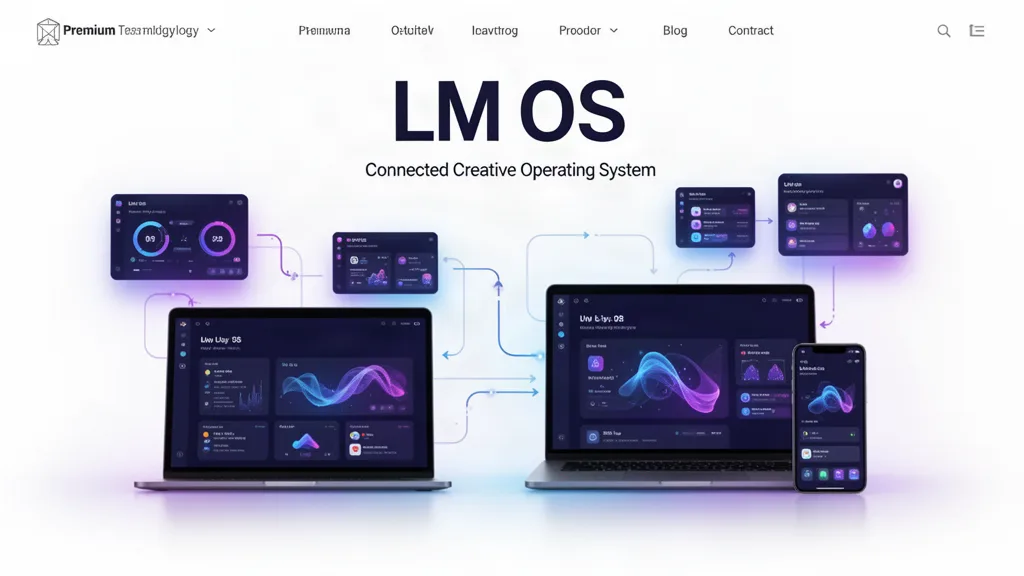
LMOS VOID Beta 0.34.9: Interaction Stress Pass, Dead-Control Cleanup, and Launch-Path Verification
LMOS now has a deeper interaction-quality pass across its operating shell and creator apps: dead-looking controls were removed or wired, search paths were made real, icon actions were labeled, every registered app entry module is regression-tested, and the complete 71-spec automated suite is green.
Pain point → fix → benefit
Controls that looked clickable but were only decorative → converted to non-interactive preview elements → users no longer waste clicks on fake affordances.
LM Websites search accepted a query but had no action → project search now returns pages, blocks and settings and opens the chosen destination → search does useful work.
Icon-only controls could be ambiguous → added accessible names and hover-title support across the affected controls → actions explain themselves.
A stale /store destination remained in LM Arcade → route corrected to /shop → the support pathway no longer lands on a missing route.
Realtime cursor regression expected browser-wide pointer events → test now targets the active LM app host → the test matches the lower-noise desktop behavior.
App registry declarations could exist even if a lazy module import later broke → every registered entry module is resolved in regression testing → broken app launch imports fail before release.
Automated verification
71 current spec files passed with 0 failures.
Every registered LM app entry module resolves in the registry regression suite.
Shared window state, fullscreen ownership, save/recovery, Office, Script, Book, Podcast, Photo Fix, app registry, ecosystem, pricing, permissions and other existing regression suites remain green.
New interaction tests cover LM Websites search, LM Tracker disclosure/checklist controls and the persistent audio-player action labels.
Manual evidence still required
Automated tests do not substitute for real-browser and real-device interaction evidence. The active Floot preview was unavailable at the end of the sweep, so Product Certification continues to leave rendered desktop, responsive, accessibility, performance and device-specific gates open until they are actually observed.
Use the beta on real work.
The most useful feedback is not “I like it.” Tell us where you hesitated, what took too many clicks, what did not save the way you expected, and what would make this useful enough to return to next week.